
Discover Comprehensive Wellness Today.
SCHEDULE CONSULTATION

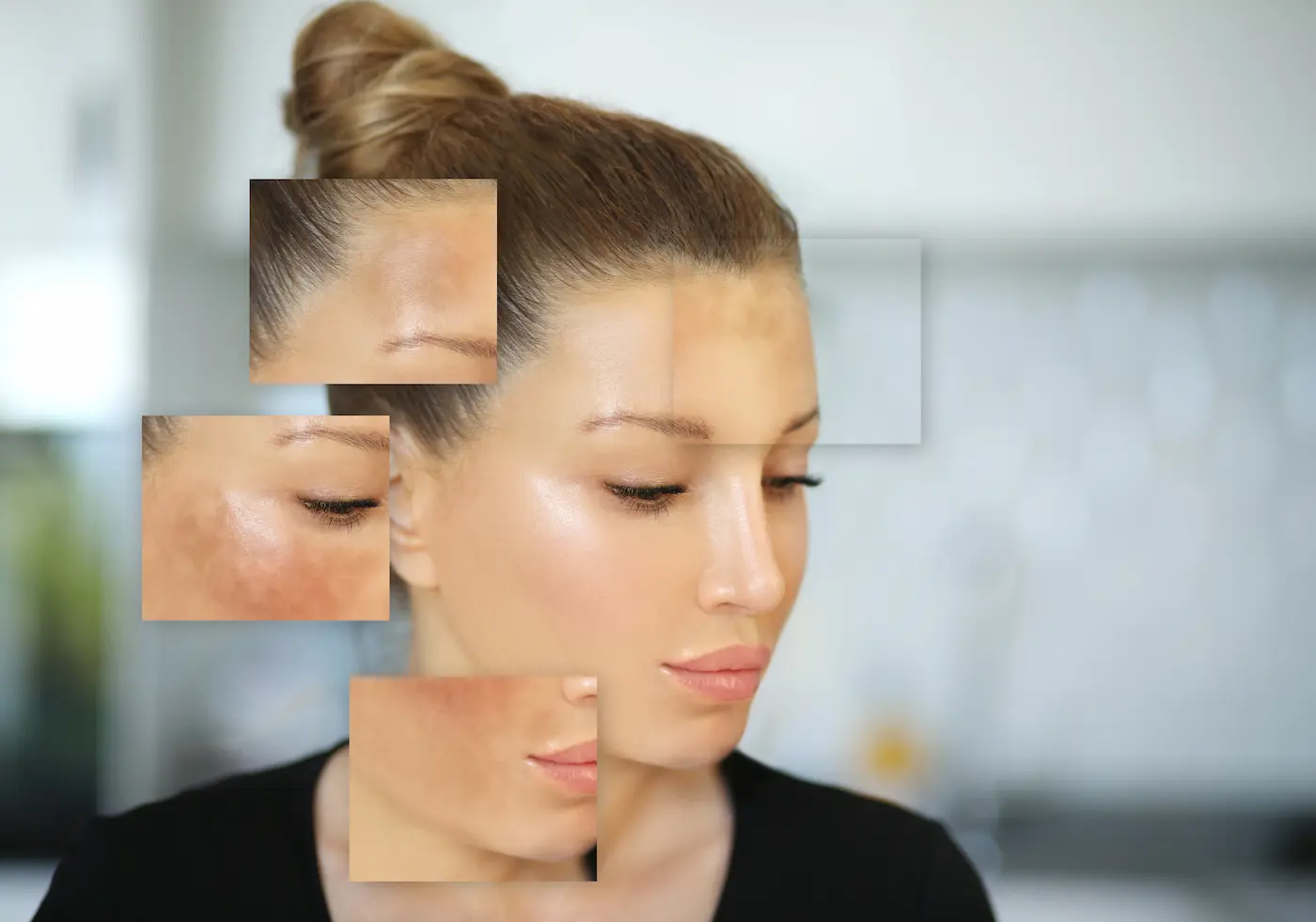
Skin pigmentation occurs when melanin production becomes uneven. Melanin gives skin its color and protects against environmental exposure. When melanin increases in specific areas, dark patches or spots may appear.
Exposure to sunlight, hormonal shifts, inflammation, and genetics all influence pigmentation patterns. Over time, uneven tone can become more noticeable and resistant to surface-level skincare.
Understanding the cause of pigmentation helps guide the most effective treatment approach.
Sun exposure remains one of the most common causes of pigmentation. Ultraviolet light stimulates melanin production, which may lead to freckles, sun spots, and age spots.
These spots often appear on the face, hands, chest, and shoulders. Cumulative exposure over many years increases visibility.
Professional treatments focus on breaking up excess pigment while supporting healthy skin renewal.
Melasma presents as brown or gray patches commonly on the cheeks, forehead, upper lip, and chin. Hormonal changes related to pregnancy, birth control, or thyroid imbalance often trigger this condition.
Sun exposure worsens melasma, which makes management challenging. Treatment requires a gentle, consistent approach.
Targeted therapies combined with strict sun protection produce the best outcomes.
Post inflammatory hyperpigmentation develops after skin injury or inflammation. Acne eczema insect bites and cosmetic procedures may leave behind dark marks.
This type of pigmentation occurs more frequently in medium to deeper skin tones. The pigment forms as the skin heals.
Treatment focuses on calming inflammation while gradually lightening pigment.
Some individuals are genetically predisposed to pigmentation. Freckles and certain dark patches may appear early in life.
Genetic pigmentation tends to be more resistant to topical products. Professional guidance helps determine realistic expectations.
Management often focuses on tone balance rather than complete removal.
Professional treatments address pigment at deeper levels than over-the-counter products. Technology and medical-grade skincare allow controlled correction.
Treatment plans are customized based on pigment depth, skin type, and sensitivity. Combining approaches often improves results.
Professional care reduces the risk of irritation and uneven lighting.
Laser and light-based therapies target pigment by breaking it into smaller particles. The body then clears the pigment naturally.
These treatments work well for sun spots and some types of post-inflammatory pigmentation. Settings are adjusted carefully to protect the surrounding skin.
Multiple sessions may be required depending on severity.
Chemical peels exfoliate the outer layers of skin to remove pigmented cells. As new skin forms, tone often appears brighter and more even.
Different peel strengths address different pigment depths. Superficial peels offer gradual improvement while deeper peels address more stubborn discoloration.
Proper preparation and aftercare support safe outcomes.
Topical treatments play an important role in pigmentation management. Ingredients such as vitamin C, retinoids, and pigment inhibitors support even tone.
Medical-grade products deliver higher potency than store-bought options. Consistent use enhances professional treatment results.
Daily sunscreen remains essential to prevent recurrence.
Pigmentation often responds best to combined therapies. A plan may include laser sessions, peels, and topical skincare.
Sequencing treatments carefully protects skin health. Professional oversight ensures compatibility.
Integrated care supports gradual and lasting improvement.
Harsh scrubs, aggressive home remedies, and unregulated products may worsen pigmentation. Over-exfoliation increases inflammation.
Inconsistent sunscreen use undermines treatment success. Pigmentation often returns without protection.
Avoiding shortcuts protects skin integrity.
Pigmentation correction takes time. Initial improvement may appear within weeks, while deeper pigment requires months.
Gradual change reflects healthy skin renewal. Patience supports satisfaction.
Maintenance treatments help preserve progress.
Individuals with dark spots, uneven tone, or blotchy skin often benefit from professional care. Skin type and medical history guide treatment selection.
Certain conditions require modified approaches. A consultation ensures safe planning.
Personalized care supports optimal outcomes.
Sun exposure triggers pigment production even after treatment. Daily sunscreen use remains non-negotiable.
Protective clothing and shade support long-term results. Education reinforces prevention. Maintenance depends on consistent protection.
Stress, inflammation, and hormonal balance influence skin health. Nutrition and sleep also play roles.
Supporting overall wellness enhances treatment response. Skin reflects internal balance.
Holistic care complements aesthetic treatments.
Pigmentation treatment improves tone rather than erasing every mark. Results appear natural and progressive.
Some pigment types require ongoing management. Understanding this supports confidence.
Clear goals guide satisfaction.
HEC Wellness Center provides personalized pigmentation treatment plans designed to address sun damage, melasma, and uneven skin tone. Each plan is tailored based on skin evaluation, lifestyle factors, and goals.
Care is delivered in a professional setting with emphasis on safety education and long-term skin health. Patients receive guidance on prevention and maintenance.
If dark spots or uneven tone affect confidence, professional pigmentation treatment may help restore clarity.
Schedule a consultation with HEC Wellness Center in Honolulu, HI, to learn which pigmentation treatments best suit your skin and how a customized approach can support a clearer, more even tone.